
Finding Queens Residents by Record Key
No single public list proves who lives at a Queens address. That is the honest starting point. Instead, use the record key that fits the question. A current address should become a Borough, Block, and Lot. That key is known as a BBL, and it comes before any property or deed lookup. A historical name belongs in a dated directory volume. A court matter needs its court, year, and index number. The Board of Elections tool answers only registration status. It answers only when its required fields match exactly. Each key opens a different door.
Stay in the right lane with every result. A recorded deed names the parties to a document, not necessarily a current occupant. A printed directory places a name at an address for that volume's year alone. A miss in one Queens database can mean a spelling variant or a different custodian. It can also mean a restricted record or a coverage gap. The useful Queens residents directory trail is a chain of matched keys, dates, and source boundaries. Check it one link at a time.
- Start an address question with the official property portal or GOAT geography lookup and record the Queens BBL or BIN.
- Use that BBL in ACRIS to inspect a recorded document, its date, and its party roles.
- For a specific voter-status question, use the exact BOE name, birth date, borough, and ZIP fields.
- For an older household, locate a dated directory volume, then save its year, page, spelling, and repository.
- When the public index stops, ask the responsible Queens office or agency for an existing record using a narrow identifier and date range.
Queens Resident Records at the Right Office
Queens borough and county work is divided among New York City agencies and the courts. The NYC Department of Finance Office of the City Register records Queens property documents through ACRIS. The Queens County Clerk holds Supreme Court records, certifications, and business certificates. The Department of Finance Property Information Portal supplies property keys. The Board of Elections runs the precise registration-status check. Each office answers a different question. Moving between them is normal.
The Queens County Clerk sits at 88-11 Sutphin Boulevard in Jamaica, Room 106. It posts Supreme Court records online along with its certification route. The City Register office is at 144-06 94th Avenue in Jamaica. Older land records and current court records share no universal search screen. Bring the BBL, CRFN, index number, date range, or certificate number that belongs to the record class. Do this before you go in person or send a request.
NYC Finance Property Portal
Online address and BBL search
Queens parcel and tax-map routes
Queens Board of Elections
118-35 Queens Boulevard, 11th Floor
Forest Hills, NY 11375
718-730-6730
The Queens County Clerk office page lays out the court and certification path for follow-up on a court index.
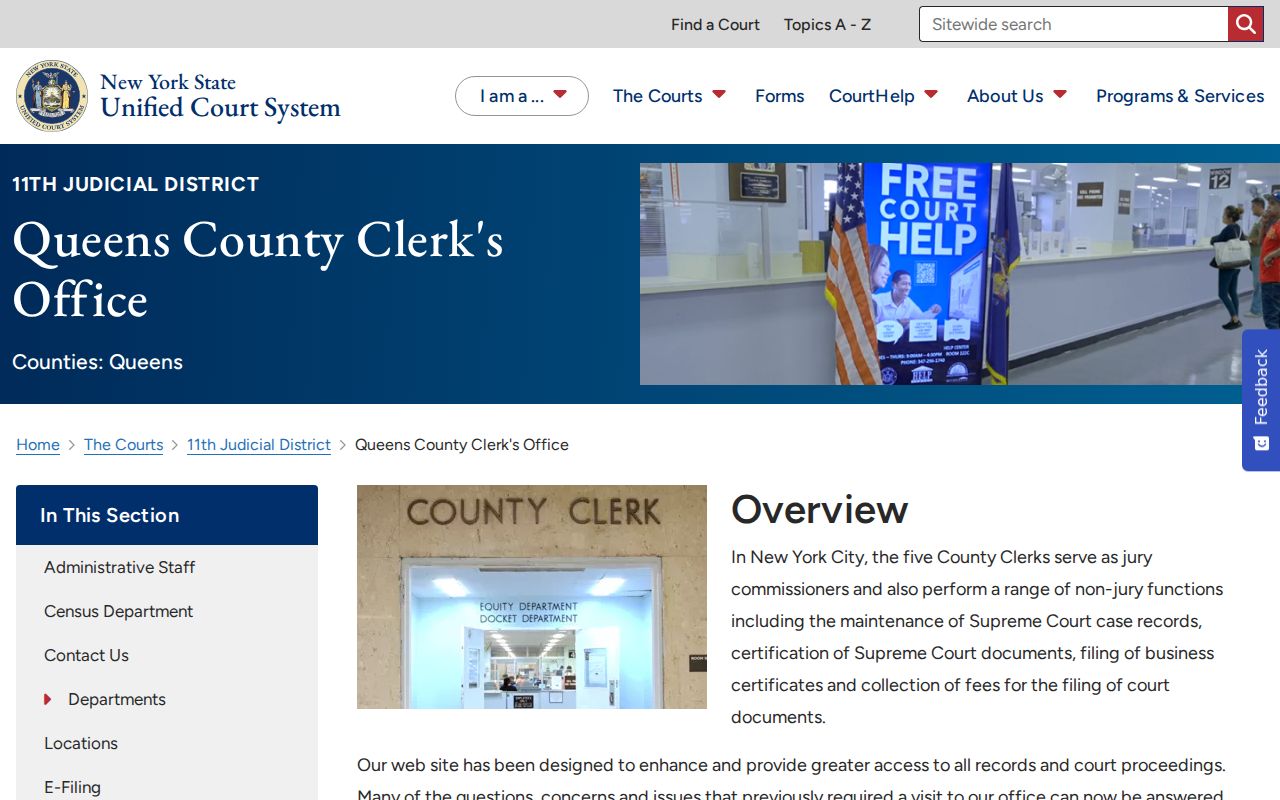
The clerk route serves one Queens case or certification question, not a broad name directory.
Queens Property Records: PIP and BBL
The NYC Property Information Portal is the practical first stop for a Queens address. It accepts an address, intersection, common place, BBL, or borough and block. Condo numbers, co-op development numbers, REUC identifiers, air lots, and subterranean lots work too. Its parcel card can lead to an ACRIS link plus tax-map and alteration-history routes. Owner-name search is not the official starting point. So lead with the address and parcel key.
GOAT and ZoLa help when a Queens house number is tricky. A hyphen, a range, an old street name, or a confusing postal label can all cause trouble. GOAT returns BBL, ZIP, census geography, precinct, community district, and council district. Those labels describe geography, not title. Confirm the borough, block, lot, address, and any special condo or lot designation on the PIP parcel result before any document search begins.
| Queens portal field | Use it for | Important limit |
|---|---|---|
| Address or intersection | Find a property starting point | Match the borough and street form |
| BBL or borough/block | Open a specific tax lot | A lot is not an occupant record |
| Condo, co-op, air, or subterranean lot | Reach specialized parcel forms | Confirm the property form first |
| ACRIS link | Move to recorded documents | Read the document image and date |
Check the Property Information Portal search choices to see the official entry routes before starting a Queens residents directory address trail.
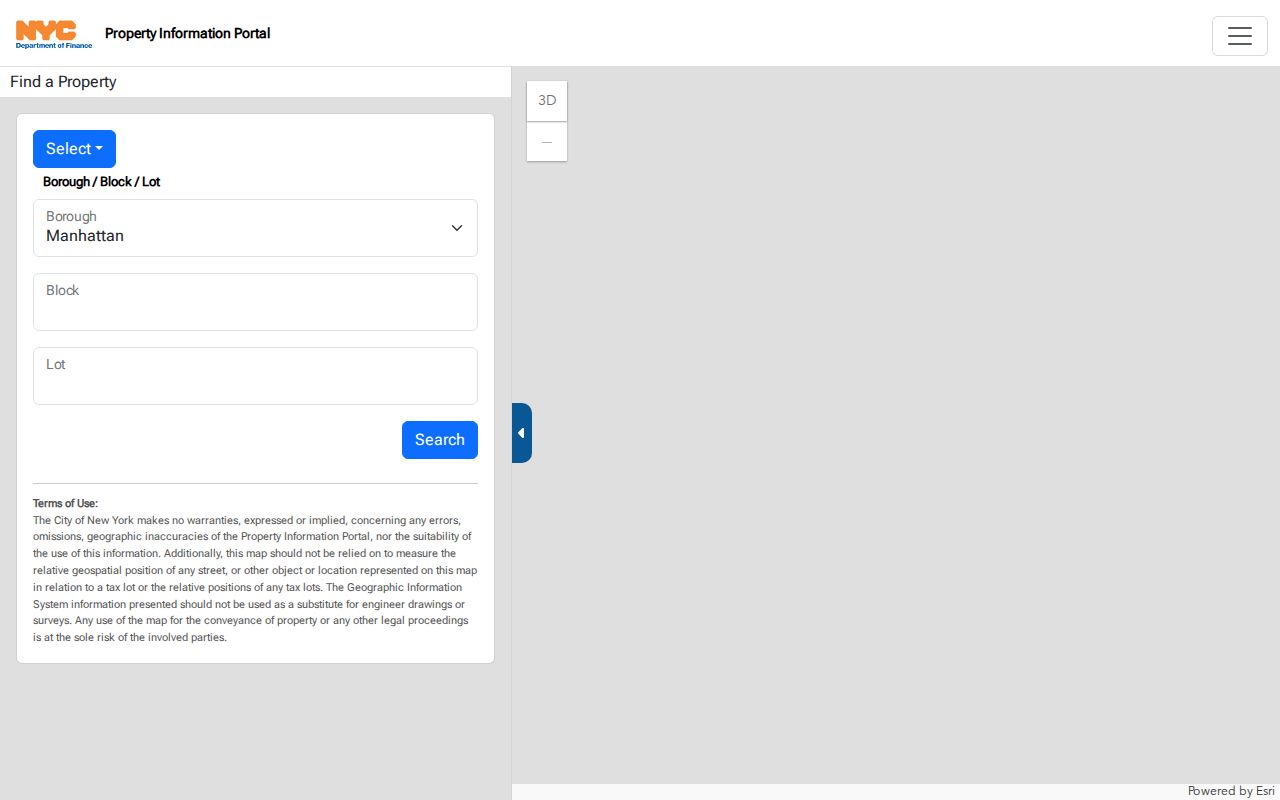
Once the Queens parcel key is stable, carry it straight to ACRIS or a map record rather than guessing from a surname alone.
- BBL
- The city identifier made from borough, block, and lot for a Queens tax lot.
- BIN
- A building identification number used in city building and geography systems.
- Parcel
- A tax-lot record that identifies property geography, not proof of who occupies it.
- Record index
- A finder record that points to an underlying document, volume, case, or image and has its own limits.
- Resident roll
- A custodian's list for a specific public purpose, such as the BOE registration system, not a universal household list.
- Criss-cross directory
- A historical reverse or street-order directory section that can connect an address and a surname when the volume includes it.
Queens ACRIS Records Begin in 1966
ACRIS is the recorded-document index for Queens, covering 1966 to the present. It supports party-name, parcel, document-type, document ID or CRFN, transaction, reel/page, UCC, and federal-lien searches. A sound search starts with the legal row for the BBL and street. Then read the master row for document type and date. Party rows follow, showing roles and stated mailing details. The document image and cross-reference tab resolve far more than a name hit alone.
The ACRIS party address is a mailing field, nothing more. It is not automatically the property situs. A grantee is not automatically a present resident. The result view can show borough, block, lot, reel/page or file, CRFN, document type, document date, recorded date, page count, party fields, remarks, and amount. That makes ACRIS a strong document trail. But it is a poor shortcut to a general Queens residents directory.
Land records before 1966 are not online in ACRIS. The City Register points researchers to the Land Records Research Library at the Queens City Register office, 144-06 94th Avenue. Bring a party name, BBL, document type, CRFN, transaction ID, or reel/page when available. Certified copies go through a separate City Register process. They may be mailed or picked up rather than emailed.
Note: The ACRIS index is a starting record. Confirm the image, document class, and recording date before relying on a party or address field.
Queens Voter Status Uses Exact BOE Fields
The NYC Board of Elections Am I Registered? form is a narrow confirmation tool. It is not a residents directory. It asks for a first name, last name, birth date, borough, and ZIP code. Queens results come back as a registration status or a record-not-found message. A mismatch can stem from many causes. The date, ZIP, borough, or spelling may be off. The record may be inactive or moved, or routine list maintenance may be the culprit. So a no-match answer does not prove a person never lived in Queens.
New York Election Law sections 3-220 and 5-602 set separate rules for registration records and their inspection. Driver-license, non-driver-ID, Social Security, and facsimile details stay protected. Public voter rolls may be arranged by election district and street number. They may also be arranged alphabetically by name. Still, confirm the current Queens inspection and copy procedure with the Board of Elections directly rather than inferring it from the five-field form. Use the official Queens voter-status check only when those exact identifiers suit the question at hand.
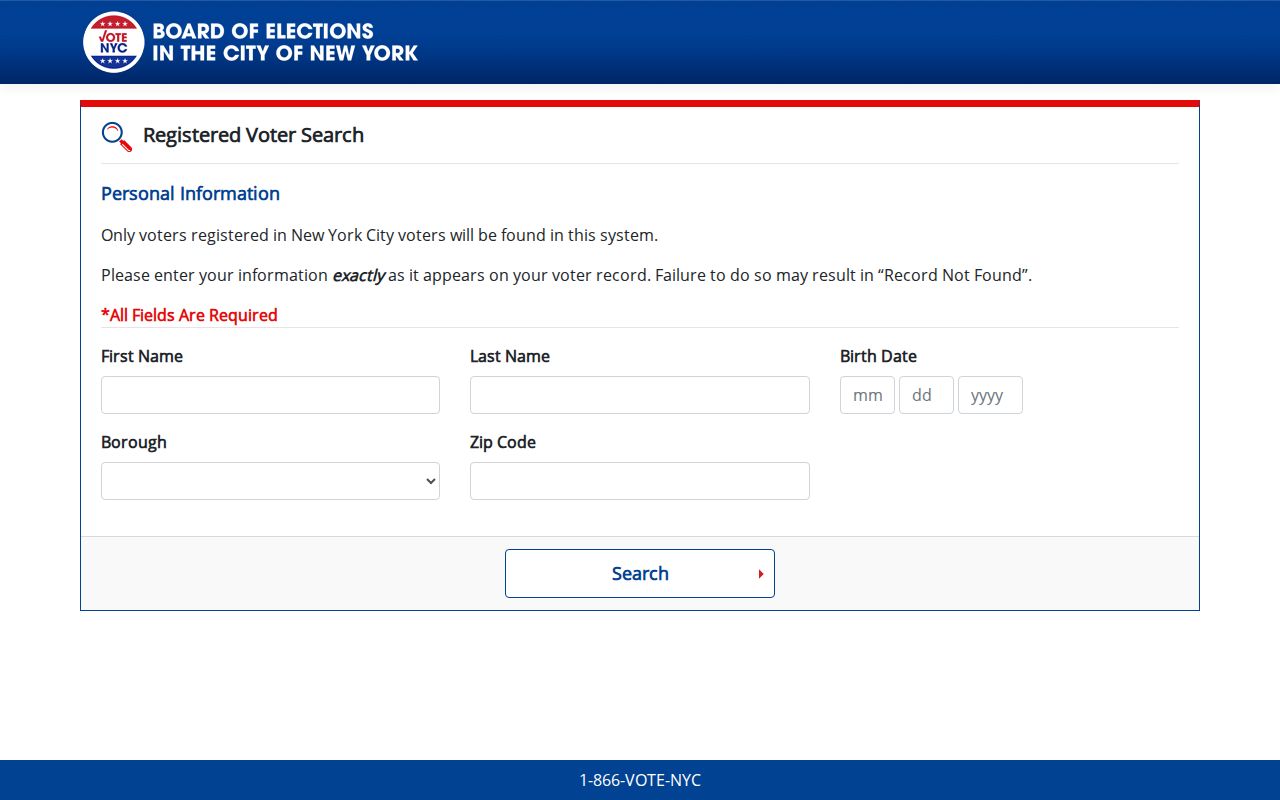
Those required fields explain the result. A Queens voter-status answer is precise confirmation, not a broad people search for a residents directory.
Current Queens Resident Directory Sources
Queens records serve a lookup best when their scope matches the question. A property portal supplies a parcel key. ACRIS names the parties to recorded instruments. The BOE confirms an exact registration-status inquiry, and eCourts returns public case indexes by court and filter. No single source identifies every person tied to an address. Each carries its own redactions and update timing. So a Queens resident lookup should lean on the source that fits.
| Queens source | What it can show | Custodian | Access boundary |
|---|---|---|---|
| Property Information Portal | Parcel, BBL, tax-map and related-property details | NYC Department of Finance | Property key, not title proof |
| ACRIS | Parties and details in recorded documents | NYC City Register | 1966-present online |
| Am I Registered? | Exact voter-registration status | NYC Board of Elections | Five required matching fields |
| WebCivil | Public civil party and case index details | NYS Unified Court System | Selected public records only |
| NYSED verification | License number, profession, status, and update context | NYS Education Department | Official license record only |
For a question about one person, keep two independent keys. A court and a year, or a BBL and a recording date, work well together. The resident-lookup route is strongest when the result carries a source-specific identifier rather than a same-name guess from a street directory entry.
| Official Queens record path | Commercial people-finder category |
|---|---|
| Names the custodian, record class, access rule, and stated update boundary. | May combine data from different sources with its own cost, update cycle, and coverage limits. |
| Lets a reader inspect the underlying portal, document, volume, or request procedure. | Can be a lead only; confirm any claimed match with the responsible public custodian. |
| Keeps a party field, parcel, court role, or historical entry in its original context. | Should not replace the source date, record key, or access restriction of the original record. |
Queens Court Records Need a Case Key
The NYS eCourts entry point splits searches by court and case type. WebCivil Local takes index, party, attorney, and judge searches. Court, case-type, filing-year, status, future-appearance, and sort controls narrow the results. WebCivil Supreme adds name, justice, and party-role choices. Record the Queens court you select. Note the year and status filters. Save the returned index number, too. A party name alone is not a reliable match.
WebCriminal, WebFamily, and WebSurrogate each cover less ground. Family matters face strong restrictions. WebSurrogate searches estate indexes by name. You can also search by date of death, file number, old index, or index-book page. It places images from February 19, 2014 online. Older images sit at public computers in the records office. Sealed, restricted, or not-yet-entered matters can be absent. Treat a no-match result as an access boundary, not a complete history.
The Queens County Clerk is the fallback for Supreme court records and certifications. When you find a published decision or docket entry, note the case name and court. Add the index number, filing or decision date, procedural status, and the official link. Leave out sensitive allegations and identifiers you do not need to explain the records path.
Queens FOIL Requests Need a Narrow Scope
When a Queens agency publishes no index, a state law frames the request. That law is New York's Freedom of Information Law, Public Officers Law Article 6. Use NYC OpenRecords for most city-agency filings. Name the agency and the record type. Add a date range, the known location or identifier, and the format you want. Check City OpenData first. An existing dataset may answer the question outright.
State guidance gives an agency five business days to grant, deny, or acknowledge a request. If more time is needed, the agency should supply an approximate date. Longer delays carry further notice expectations. A narrow request for an existing record beats asking an agency to build a new list. It also beats asking the agency to tackle broad research. Copying guidance commonly runs 25 cents per letter or legal page. Other media or search costs can differ.
FOIL cannot override vital-record eligibility, court sealing, or Address Confidentiality Program protection. Access denied or redacted? Retain the cited exemption, the appeal route, and the date of the response. Request non-exempt portions where that fits.
Historic Queens Resident Directory Shelves
For a former Queens household, a dated city directory often beats a modern portal. The Queens city directory collections page holds the detailed shelf and reading method. NYPL's digitized New York City directories span 1786 through 1934. The Municipal Archives describes a 152-volume city-directory collection covering 1837 through 1923. Queens-local and Trow runs add tighter borough and neighborhood leads for tracing past residents.
A directory entry proves only a printed name. It places that name at an address in one given volume. No title is established. No family relationship is shown. The same goes for any current presence. Preserve the printed spelling, the volume year, the page, the repository, and any doubt about all of it. Queens telephone directories, library guides, maps, and archival collections can then test the address. They confirm whether the address and street label hold up across time.
Queens Records Before 1898 Need Old Place Names
New York City consolidation took effect on January 1, 1898. Earlier Queens material may sit under Long Island City, Newtown, Flushing, or College Point. It may also sit under a town or village name instead. A search using only the modern borough label can miss a whole directory. It can miss a certificate, map, or register too. Keep the historic jurisdiction exactly as printed. Add the current Queens name only as a research aid.
| Before 1898 | Search the town, village, or Long Island City label used by the source. |
|---|---|
| 1898 consolidation | Queens enters the modern citywide borough framework. |
| 1966 | Marks the online ACRIS boundary for Queens recorded documents. |
| Current archive work | Use borough, collection, series, and historic place name together. |
Records from before 1898 speak in old place names, so translation comes first. Final maps, Queens Public Library finding aids, and GOAT geography tools bridge the gap between historic street labels and the ones on maps today. Remember that Jamaica Avenue once carried the name Fulton Street; treat that as a cue to pull the right map sheet, not a shortcut that works for every address.
Queens Resident Records Have Privacy Limits
Queens public availability is field-specific. Court interfaces omit sealed and otherwise restricted matters. Vital records carry relationship, identity, court-authority, or archival rules, and DMV personal information stays protected. The Board of Elections also excludes certain identifiers from released registration material, so a public index result is a lead to verify rather than permission to build a personal profile.
New York's Address Confidentiality Program gives eligible participants a substitute mailing address with mail forwarding. The real address stays protected except in specified law-enforcement or court processes. Never try to reverse a substitute address. A result may be restricted. In that case, use the custodian's published secured channel instead of hunting through another public index.
Note: Record only the minimum facts needed. Include the source, record type, date, official identifier, and a link to the custodian.
Queens Deed Alerts Follow a Parcel
Queens property registrants can get a free alert for a property. The tool is the ACRIS Notice of Recorded Document service. Registration takes the property or BBL plus contact and certification fields. One property goes on each registration. The alert fires when a deed, deed-related, mortgage, or mortgage-related document records. After a notice arrives, open the actual document or contact the Department of Finance.
An alert is not a title guarantee. It also does not establish fraud. In April 2026, the Mayor's Office announced a Deed Theft Prevention Office. It reported more than 3,500 citywide complaints from 2013 through 2023, mostly in Brooklyn and Queens. A complaint, notice, or indictment is a procedural event rather than a final finding. The safest next step is a comparison. Match the BBL, document date, recording details, and the official document image.
Queens Resident Records Need Local Context
A single Queens address can carry several valid geographies. Postal ZIP, community board, precinct, council district, census tract, tax lot, and historic town may all apply at once. NYC Planning resources and GOAT establish current geography, while the parcel portal supplies the BBL. The Queens County Clerk or eCourts supplies a case key. NYPL, the Municipal Archives, Queens Public Library, and the Queens Historical Society supply the historical layer. Together these form a layered Queens residents directory of geographies.
The Queens Historical Society library collections hold maps, atlases, family papers, photographs, rare books, genealogies, and ephemera. The materials span about 300 years. Research is available by appointment. Queens Public Library finding aids point to Sanborn and Belcher Hyde maps, cemetery maps, census enumeration maps, and final maps. These can retain both old and new street names. Before calling or scheduling, have the neighborhood, date range, address form, and desired collection ready.
Queens Records Change, So Date Every Result
City portals, court indexes, custody status, fees, office hours, ZIP assignments, and archival digitization all change. These shifts happen over time. Save the source URL, the date checked, exact search fields, result status, and source boundary. A useful negative-result note distinguishes not found, not public, not digitized. It also distinguishes not located in official sources. Those are different outcomes. They lead to different follow-ups.
Queens records are expanding as well as shifting. A 2025 city project announced digitization of historical records involving Queens. The 2026 Newest New Yorkers report offers current neighborhood context rather than person-level proof. Recheck an official collection or office before relying on an old capture. A dated, source-specific record trail beats a long unsourced list of names.